What is a NNN lease? Triple net, explained for first-time tenants
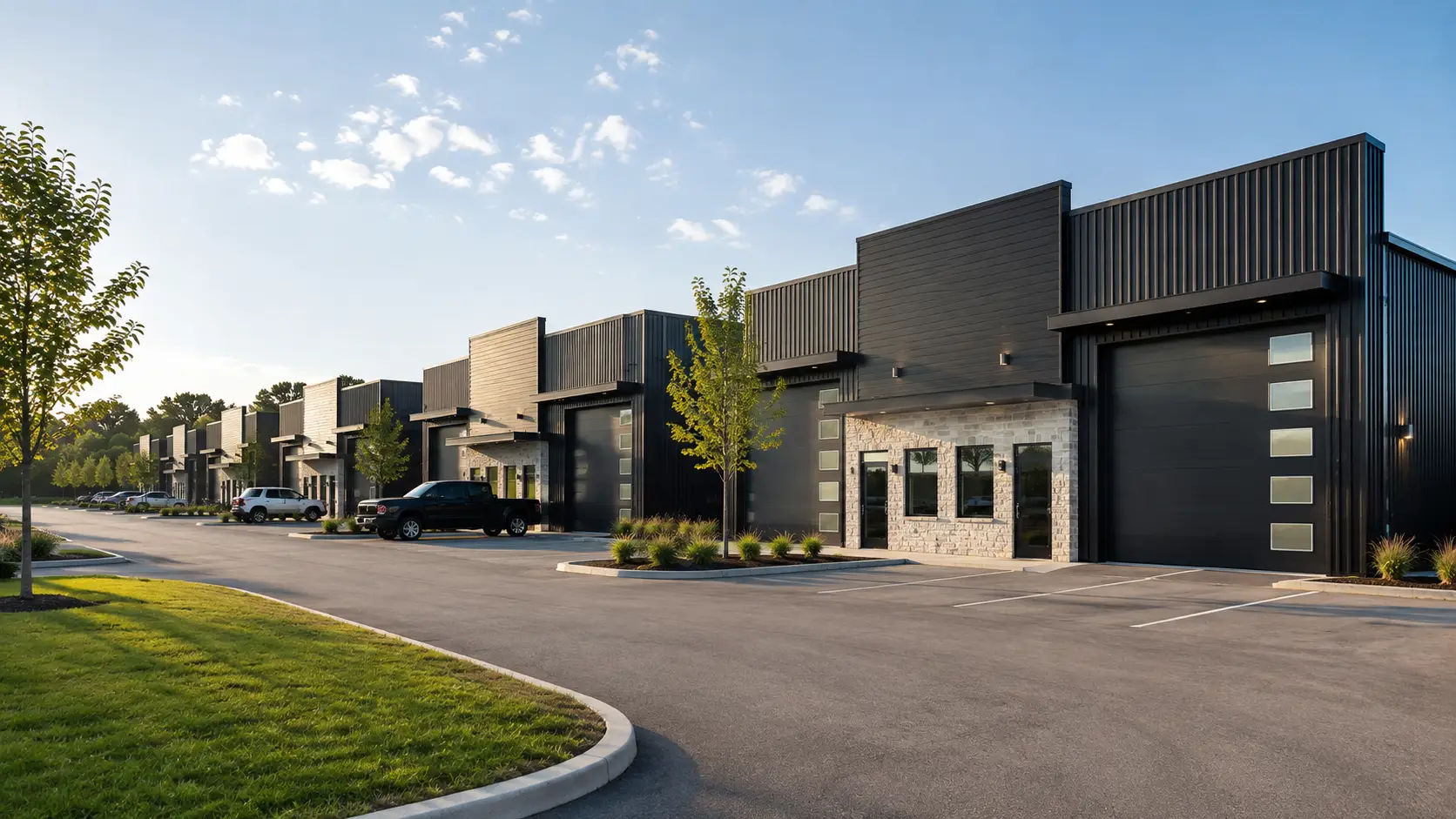
A NNN (triple net) lease means you pay a base rent plus your proportional share of the property's three operating costs: property taxes, building insurance, and common-area maintenance. Nearly all flex and industrial space in North Texas — including ours — leases this way. It looks scarier on a quote sheet than a single all-in number, but it's actually the more transparent structure once you know how to read it.
The three Ns, one at a time
Net #1 — Property taxes
Texas funds itself through property taxes rather than a state income tax, so this is the biggest N here. The landlord receives the county's bill and passes each tenant its share, proportional to square footage. You can look up any property's assessed value through the county appraisal district (for our Rockwall park that's the Rockwall Central Appraisal District), and the Texas Comptroller's property tax page explains how the system works.
Net #2 — Building insurance
The landlord's policy on the structure itself — fire, wind, hail (a real line item in North Texas). This does not cover your business: you'll carry your own liability policy and contents coverage, which the lease will require.
Net #3 — CAM (common-area maintenance)
The shared costs of running the park: parking lot maintenance, landscaping, exterior lighting, water for irrigation, management. In a well-run small-bay park this is the smallest N.
A worked example
Take a 2,000 SF unit quoted at “$16.00 NNN, NNNs estimated at $4.50”:
| Line | $/SF/yr | Monthly |
|---|---|---|
| Base rent | $16.00 | $2,667 |
| Taxes + insurance + CAM | $4.50 | $750 |
| Total occupancy | $20.50 | $3,417 |
NNN charges are estimated at the start of each year and reconciled after it ends — if actuals came in lower, you're credited; higher, you're billed the difference. Full market context for these numbers is in our DFW flex space cost breakdown.
What first-time tenants should actually negotiate
- A cap on controllable CAM increases — taxes and insurance float, but management and maintenance costs can be capped at a yearly percentage.
- Reconciliation transparency — the right to see the backup behind your annual NNN reconciliation.
- Capital-expense exclusions — a new roof shouldn't land in year-one CAM; structural items belong to the landlord.
- Last year's actuals — ask what NNNs ran the previous year. A landlord who won't say is telling you something.
New to the space category itself? Start with what flex space is, then size your unit with our sizing guide.
FAQ
What do the three Ns stand for?
Property taxes, building insurance, and common-area maintenance (CAM). You pay a proportional share of each on top of base rent.
Are NNN charges negotiable?
The costs mostly aren't, but caps on controllable CAM increases, audit rights, and capital-expense exclusions are all fair asks.
Is a gross lease better than NNN?
Neither is inherently better — gross bakes the same costs into a higher base rate. Compare total occupancy cost per square foot.
Want a quote sheet with no mystery lines?
Ask us for current rates and estimated NNNs at Rockwall Flex Park — we'll walk you through every number.
Request rates →