Can you run a gym, church, or retail store in flex space?
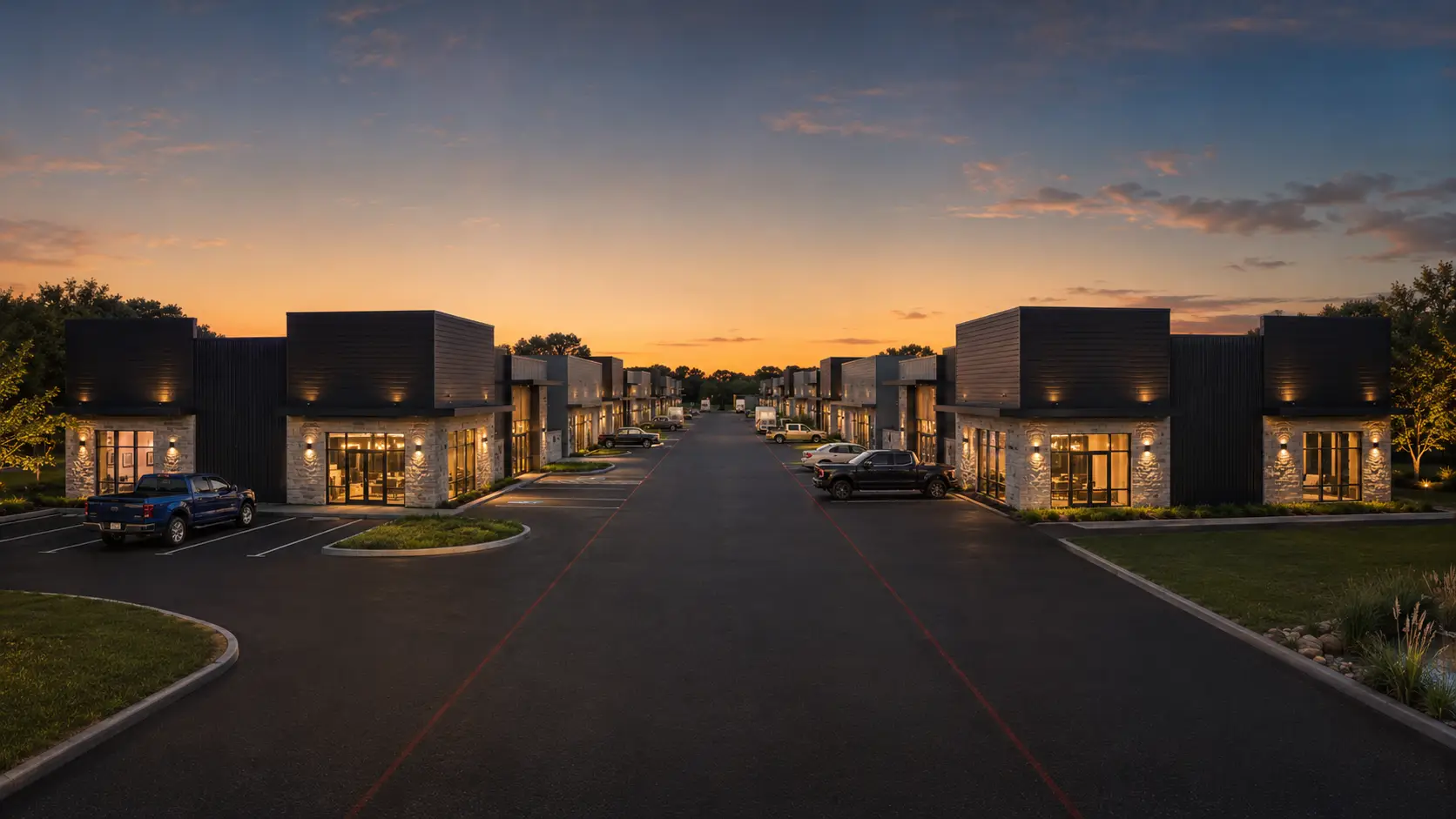
Yes, you can run a gym, a church, or a retail store in flex space, as long as two things line up: the parcel allows the use, and the building can meet what that use asks of it. Most people check the first and forget the second, and the second is usually what decides whether you open. A gym, a church, and a store each put more demand on parking, restrooms, and exits than a plain warehouse does, and that is the part that catches tenants after they have signed.
If you have ever found a space you liked and then heard the words "the code won't let you do that here," you already know this is two questions wearing one coat.
Does zoning let you run a gym, church, or store in flex space?
It depends on the parcel: inside a city, a zoning map decides it, and on ETJ land there is no city zoning map, so the county rules and the park's recorded restrictions decide it instead. A gym, a fitness studio, and a showroom all read cleanly as flex uses in most light-industrial or commercial zones. A church or an event hall is an assembly use, and that is the one more likely to need a specific-use permit inside city limits. On land in a city's extraterritorial jurisdiction, that city zoning layer drops off entirely, which widens what you can run without filing for a rezoning. We cover that mechanism in full in what ETJ status means for a flex lease, and permitted use is item two on our flex space lease checklist.
What does the building itself need for an assembly or retail use?
The building code sorts uses into groups, and a gym or church is an assembly use, a store is a mercantile use, and most flex tenants are a business or storage use. Each group carries its own rules for how many exits you need, how many restroom fixtures, and whether the space has to be sprinklered. Move a use up into assembly or mercantile and those numbers climb, because you are now putting people in the room instead of pallets. That is the cost line generic "just check your zoning" advice skips.
| Use | Building code group | Parking demand | Usually triggers |
|---|---|---|---|
| Warehouse / distribution | Storage | Low | Least added build-out |
| Contractor shop / light mfg | Business or Factory | Low to moderate | Office-level restrooms |
| Showroom / retail store | Mercantile | High | More restrooms, storefront parking |
| Gym / fitness studio | Assembly | High | Extra exits, restrooms, often sprinklers |
| Church / event hall | Assembly | High | Panic hardware and exits above ~50 occupants |
How much parking does a gym or store need versus a warehouse?
A store or gym needs several times more parking per square foot than a warehouse, so parking, not the unit, is often the real constraint. A warehouse mostly holds inventory, so a city may ask for something like one stall per 1,000 square feet. Retail brings customers, and cities commonly want closer to one stall per 250 square feet. A gym can run higher still, because a class empties and fills the lot in waves. So a 3,000 SF bay that works fine for a distributor can come up short of stalls the moment you turn it into a storefront, and the fix is either fewer occupants or a park that was laid out with the parking to begin with.
Which uses fit ScaleUp's Rockwall and McKinney parks?
We design our North Texas parks for a mix of exactly these tenants, so the answer is built into the site plan rather than bolted on later. Across our developments we plan for eight tenant categories on purpose: auto services, distribution and logistics, showroom and creative, food and beverage, light manufacturing, gyms and recreation, e-commerce and tech, and trade contractors. Our Rockwall Flex Park runs 30 units from 1,500 to 3,000 SF with 12x12 grade-level doors, individual HVAC, 3-phase power, and 18-foot clear height, which suits contractors, shops, showrooms, and studio-style fitness uses. Our McKinney park is built as retail, showroom, and flex from the ground up, with dedicated retail bays around 1,440 square feet and the parking that a storefront needs. A church or a larger assembly use is workable too, and it is the one where the occupant count and exits get sized carefully before a lease is written.
How do you confirm your use before you sign?
Ask the landlord three plain questions before you commit: what does the parcel's zoning or recorded restriction allow for your use, what building code group does your use fall under, and does this specific unit already have the parking, restrooms, and exits that group needs. A developer who leases to gyms and stores on purpose will answer all three without hedging. North Texas is where these questions come up most, because the market is filling fast. Rockwall County grew 6.5% between July 2022 and July 2023, among the fastest of any large county in the nation, according to the U.S. Census Bureau. On land in a city's extraterritorial jurisdiction under Texas Local Government Code Chapter 42, the zoning question narrows to the county and the deed, which is one reason flex parks on that land can host a wider tenant mix.
FAQ
Can you run a gym or church in flex space?
Often yes, if the parcel's zoning or, on ETJ land, the county rules and recorded restrictions allow an assembly use, and the building can meet the parking, restroom, and exit requirements that a gym or church triggers. Confirm both the use and the build-out before you sign.
Why does a retail or gym use need more parking than a warehouse?
A store or gym brings customers, so cities require far more parking per square foot than a warehouse that mostly holds inventory. Retail commonly runs around one stall per 250 square feet and a gym can run higher, while warehouse use may need one per 1,000 square feet or more.
What building code classification applies to a gym, church, or store?
A gym or church is an assembly use, a store is a mercantile use, and most flex tenants are a business or storage use. Assembly and mercantile uses carry stricter rules for exits, restroom counts, and sprinklers, which is what the build-out has to satisfy.
Have a use in mind? Let's check it against the space.
Rockwall and McKinney Flex Parks are laid out for gyms, showrooms, shops, and stores, with the parking and build-out to match. See the spaces and site plans, then tell us what you want to run.
Ask about a unit →